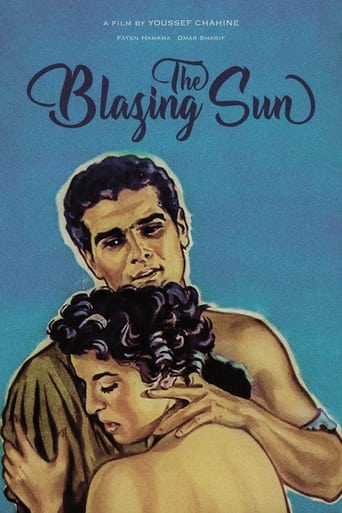
HD
as Amal أمال

Faten Hamama (May 27, 1931 - January 17, 2015) was a prominent Egyptian actress and producer, celebrated as "The Lady of the Arabic Screen." Born in El Mansoura, her illustrious career began at an early age when, at just six, she expressed a desire to perform after attending a film screening. Encouraged by her father, she entered a beauty contest and won, which led to her photograph being sent to renowned director Muhammad Karim. He cast her in the film "Yom said" (1940) ("A Happy Day"), where her talent quickly earned her additional lines and scenes, marking the beginning of her cinematic journey.
Hamama continued to impress audiences with films like "Russassa fil Kalb" (1944) ("A Bullet in the Heart") and "Dunia" (1946), showcasing her readiness for more substantial roles. To further her education, she attended the High Institute of Acting beginning in 1946.
Her career faced a hiatus from 1966 to 1971 due to political pressures, during which she lived in Lebanon and London. Her return to Egypt revitalized the film industry, and her first project back was the short film "Witch" alongside Salah Zulfikar. Notable works like "Emberatoriet Meem" (1972) ("Empire M"), portraying a struggling widow, gained critical acclaim and financial success, earning her international recognition. Her film "Orid Hallan" (1975) ("I Need a Solution") sparked significant legal reforms in marriage and divorce in Egypt.
Faten Hamama is revered as a cornerstone of Egyptian cinema, a timeless icon whose influence and talent continued to shine throughout her illustrious career.
