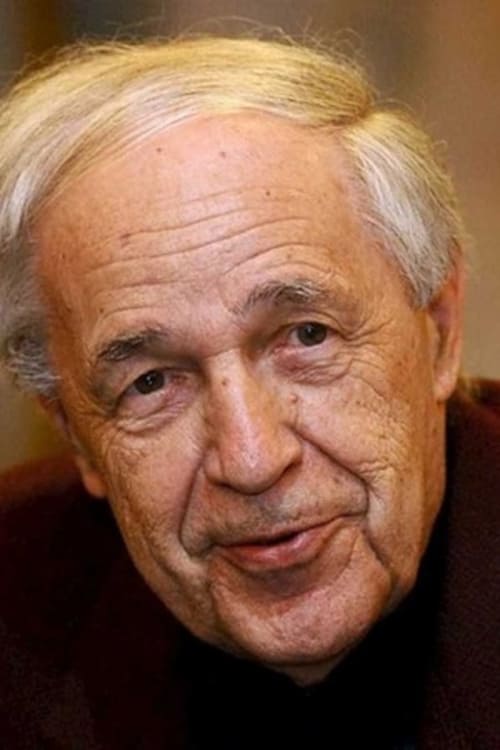
Pierre Boulez
Pierre Louis Joseph Boulez (March 26, 1925 – January 5, 2016) was a seminal French composer, conductor, and author, renowned for his influential role in shaping contemporary classical music in the post-war era. Hailing from Montbrison, France, Boulez was educated at the Conservatoire de Paris under the tutelage of Olivier Messiaen and also studied with Andrée Vaurabourg and René Leibowitz.
His professional journey commenced in the late 1940s when he served as the music director for the Renaud-Barrault theatre in Paris. Boulez emerged as a pivotal figure in avant-garde music, significantly advancing integral serialism in the 1950s, exploring controlled chance music in the 1960s, and introducing real-time electronic transformations of instrumental music in the 1970s. While his oeuvre was relatively concise due to his inclination to revise his compositions, works like "Le Marteau sans maître," "Pli selon pli," and "Répons" are hailed as milestones in 20th-century music.
As a conductor, Boulez's career spanned over six decades, during which he led prestigious orchestras, including the New York Philharmonic, BBC Symphony Orchestra, and Chicago Symphony Orchestra. He was celebrated for his interpretations of early 20th-century repertoire and contemporary composers like Ligeti and Berio. Boulez's operatic achievements included directing Wagner's "Ring" cycle and premiering Berg's "Lulu."
In addition to his artistic contributions, Boulez founded various musical institutions, notably the Domaine musical in the 1950s, IRCAM in the 1970s, and the Ensemble intercontemporain, further solidifying his legacy as a champion of modern music.
Filmography