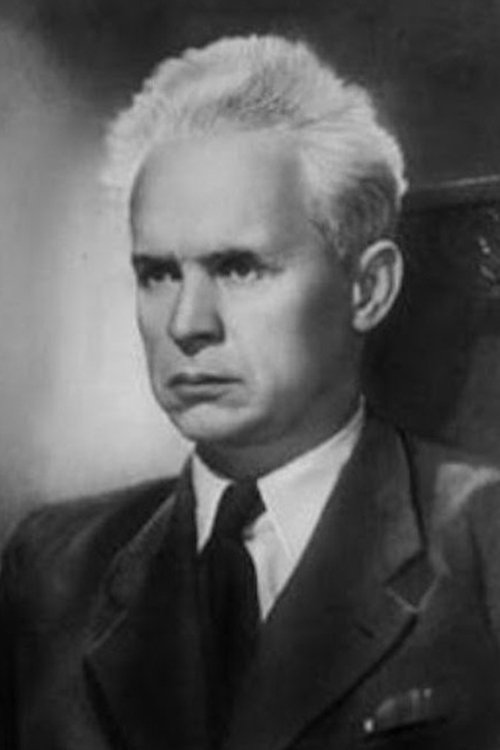
Oleksandr Dovzhenko
Oleksandr Petrovych Dovzhenko was a prominent Ukrainian Soviet filmmaker, screenwriter, and producer, recognized as a pioneering figure in early Soviet cinema. Alongside notable contemporaries like Sergei Eisenstein and Dziga Vertov, Dovzhenko emerged as a significant proponent of Soviet montage theory.
Born to uneducated parents, Dovzhenko’s passion for learning was nurtured by his semi-literate grandfather, leading him to become a teacher at just 19. His cinematic journey began in 1926 in Odesa, where his ambitious spirit led him to co-direct his second screenplay, *Vasya the Reformer*. His breakthrough came with the 1928 film *Zvenyhora*, which solidified his reputation as a leading filmmaker. Dovzhenko's acclaimed "Ukraine Trilogy," comprising *Zvenyhora*, *Arsenal*, and *Earth*, though initially met with mixed reviews from Soviet critics, gained him international recognition.
Dovzhenko's talent was acknowledged with the Stalin Prize for his work on *Shchors* in 1941 and again in 1949 for *Michurin*. Throughout his two-decade career, he directed only seven films but remained influential in the industry, mentoring rising talents such as Larysa Shepitko and Sergei Parajanov.
Dovzhenko passed away from a heart attack on November 25, 1956, in Peredelkino. His legacy continued through his wife, Yulia Solntseva, who produced films and completed unfinished projects. In tribute to his contributions, the Dovzhenko Film Studios in Kyiv were named in his honor after his death.
Filmography