
Youssef Chahine
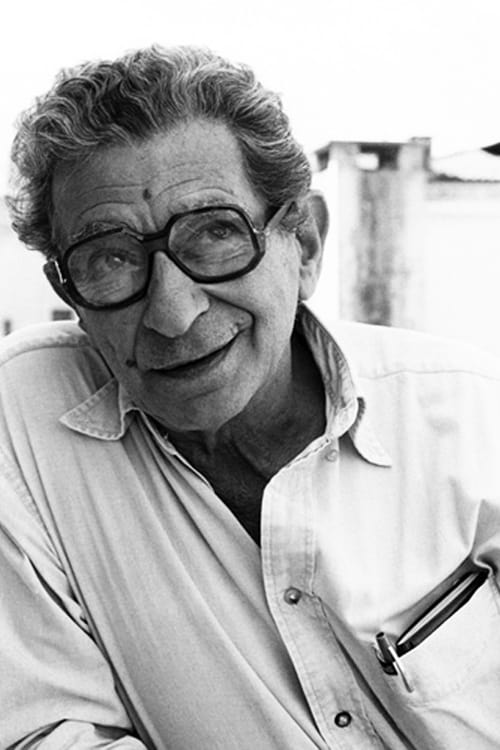
Youssef Chahine, born in Alexandria, Egypt in 1926, began his educational journey at a friars' school before completing his studies at Victoria College, where he earned his High School Certificate. Following a brief enrollment at the University of Alexandria, he pursued his passion for film and dramatic arts at the Pasadena Playhouse in the United States for two years. Upon returning to Egypt, he was ushered into the film industry by cinematographer Alevise Orfanelli.
Chahine made his directorial debut with "Baba Amin" in 1950, but it was his second film, "Son of the Nile" (1951), that marked his first appearance at the Cannes Film Festival. His career continued to flourish, earning him a Golden Tanit at the Carthage Festival in 1970. Notably, "Le moineau" (1973) became the first co-production between Egypt and Algeria. In 1979, he received a Silver Bear at the Berlin Film Festival for "Alexandria... Why?", the first part of his autobiographical trilogy, which continued with "An Egyptian Story" (1982) and culminated in "Alexandria: Again and Forever" (1989).
In 1992, he collaborated with Jacques Lassalle to stage Albert Camus' "Caligula" at the Comédie Française, a venture that garnered significant acclaim. That same year, he began work on "The Emigrant" (1994), inspired by the Biblical figure Joseph, a long-held aspiration that he successfully brought to the screen. After a lengthy hiatus, Chahine returned to Cannes in 1997 with "Destiny," selected for the prestigious festival's Hors Competition section.
Filmography
Cairo Station